Lincoln BlueCruise on the 2026 Aviator: What Hands-Free Driving Really Changes on Highway 10
June 23 2026,
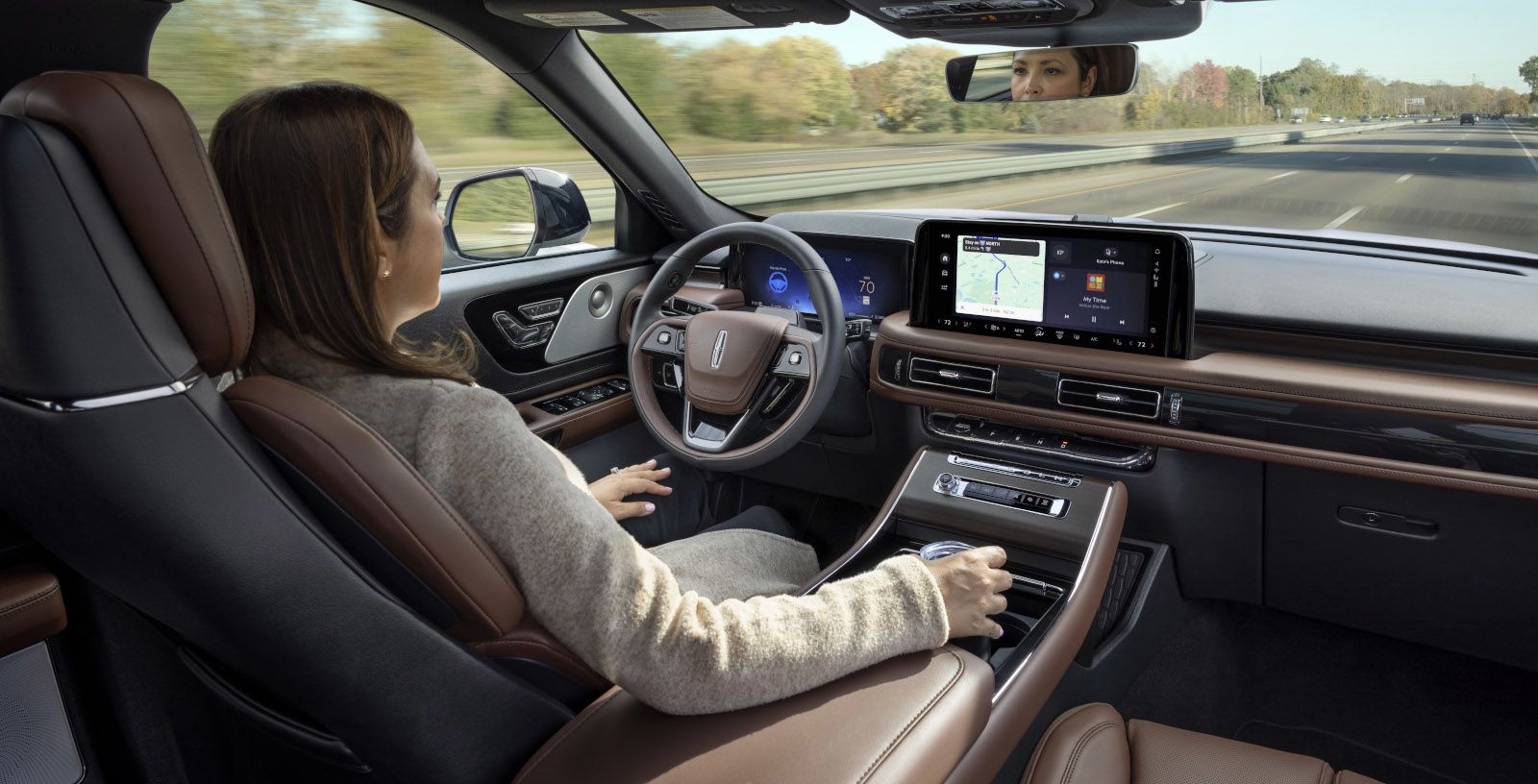
Anyone who regularly drives Highway 10 between Brossard and downtown Montreal knows the drill: a succession of bottlenecking lanes, 100 km/h zones that suddenly bottleneck into abrupt slowdowns, and occasionally, on clear stretches, the welcome temptation to finally drop your shoulders and relax. This is exactly where Lincoln BlueCruise technology—available as a standard feature on the Lincoln Aviator—truly shines.
BlueCruise is not your conventional cruise control. It is a hands-free highway driving system that manages acceleration, braking, and steering—provided you are within a mapped and approved zone. For South Shore and Quebec drivers who spend hours every week on specific highway corridors, understanding how this system works in practice is far more valuable than a simple list of technical specs.
What Exactly Does BlueCruise Do?
BlueCruise technology continuously monitors the lane you are driving in, your distance from the vehicle ahead, and your vehicle's lateral position within the lane. In mapped hands-free zones—on highways where the system has been certified—you can remove your hands from the steering wheel, and the system will maintain your course without intervention.
Two specific features are particularly worth noting:
-
Lane Change Assist: When you activate the turn signal while BlueCruise is active and the adjacent lane is clear, the system performs the lane change on its own without requiring steering input from you. This feature is available from speeds of 65 km/h and above.
-
In-Lane Repositioning: If a vehicle in an adjacent lane gets too close, BlueCruise subtly shifts your vehicle toward the center or the opposite side of your lane to maintain a comfortable lateral buffer.
These two features work together to reduce the attentional workload during repetitive highway commutes—without removing the driver's responsibility, as you must remain alert and watch the road at all times.
How Do You Know If BlueCruise Is Active?
The Aviator's instrument cluster displays a BlueCruise status indicator using three colors:
-
Grey: BlueCruise is enabled but inactive (not yet in a hands-free zone).
-
Green: BlueCruise is active and providing continuous steering assistance.
-
Blue: BlueCruise is active and hands-free mode is available—you can safely remove your hands from the wheel.
As soon as the system transitions to blue mode, the dashboard graphic changes from a steering wheel with hands to a steering wheel without hands. This clear visual signal eliminates any ambiguity about the exact moment hands-free mode becomes available.
What BlueCruise Does Not Replace
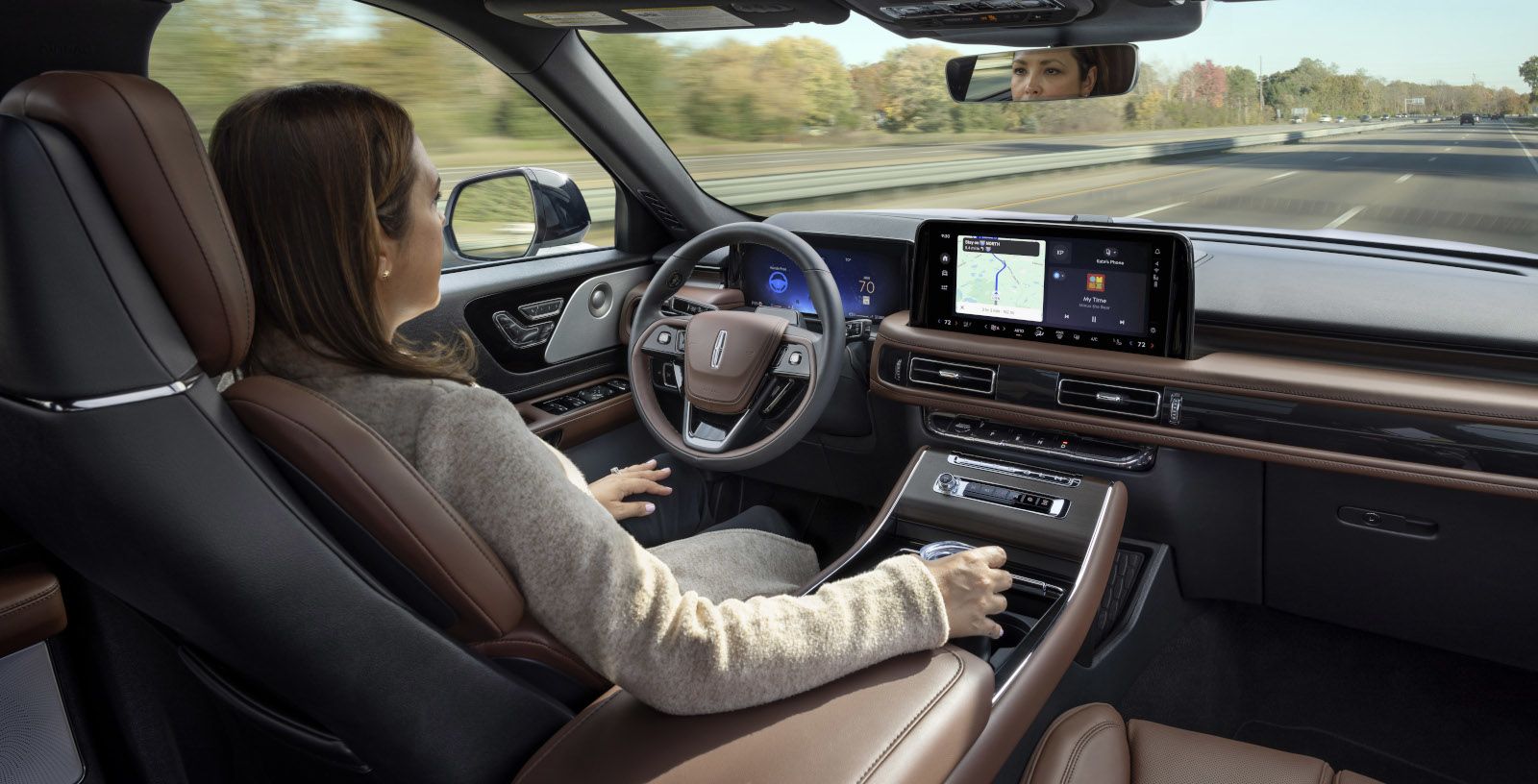
It is essential to understand the system's limitations. BlueCruise is not an autopilot and only functions on highways mapped within its database. It does not handle intersections, traffic lights, or urban areas. It also does not make decisions at on-ramps or off-ramps.
The technology is engineered to assist the driver on long, repetitive stretches at a constant speed—typically Highways 10, 20, or 30 in the Montreal area—rather than substituting for human judgment in complex situations.
Furthermore, the system constantly monitors driver attentiveness. If you look away from the road for an extended period, BlueCruise will issue an alert and may deactivate hands-free mode until your eyes are back on the road ahead.
Standard BlueCruise on the Aviator: What It Means in Practice
On the Aviator, BlueCruise is included as a standard feature—complete with four years of connected service included with the purchase of the vehicle. This stands in contrast to the approach of some manufacturers who offer this technology as a paid option or via a separate subscription starting from year one.
The Aviator also comes standard with Lincoln Co-Pilot360 2.1, a suite of driver assistance features that includes emergency braking assist, pedestrian detection, lane-keeping assist, and a 360-degree camera. BlueCruise builds upon this foundation for specific highway situations, creating a level of driving comfort that few three-row SUVs in this price class can match.
Key Takeaways — BlueCruise on the Aviator:
Included standard with 4 years of connected service at purchase.
Functions on mapped highways within hands-free zones.
Lane Change Assist: Automatic lane changes starting at 65 km/h.
In-Lane Repositioning: Automatic lateral adjustments to maintain a comfort zone.
Three-color status indicator (Grey / Green / Blue) on the dashboard.
The Aviator: Well Beyond Hands-Free Driving
While BlueCruise technology is a standout feature of the Aviator, this three-row SUV is also equipped with a 3.0L twin-turbo V6 engine producing 400 horsepower and 415 lb-ft of torque, mated to a 10-speed SelectShift automatic transmission. The standard adaptive suspension continuously adjusts to road conditions to minimize vibrations and improve cabin isolation—a significant benefit on Quebec roads, where surfaces can vary dramatically depending on the season.
The Aviator’s three-row interior is crafted around quietness and space. Heated and ventilated front seats are standard, as is the Panoramic Vista Roof. The available Revel Ultima 3D audio system features 28 speakers for drivers looking to turn their commute into an immersive acoustic experience, whether on the A-10 or on the way to the Laurentians.
Come Experience BlueCruise at Montmorency Lincoln in Brossard
BlueCruise technology is best understood from behind the wheel rather than on a spec sheet. The team at Montmorency Lincoln in Brossard can arrange a test drive on the roads you already know, allowing you to evaluate the system under real-world conditions. Speak with one of our advisors today to plan your visit.